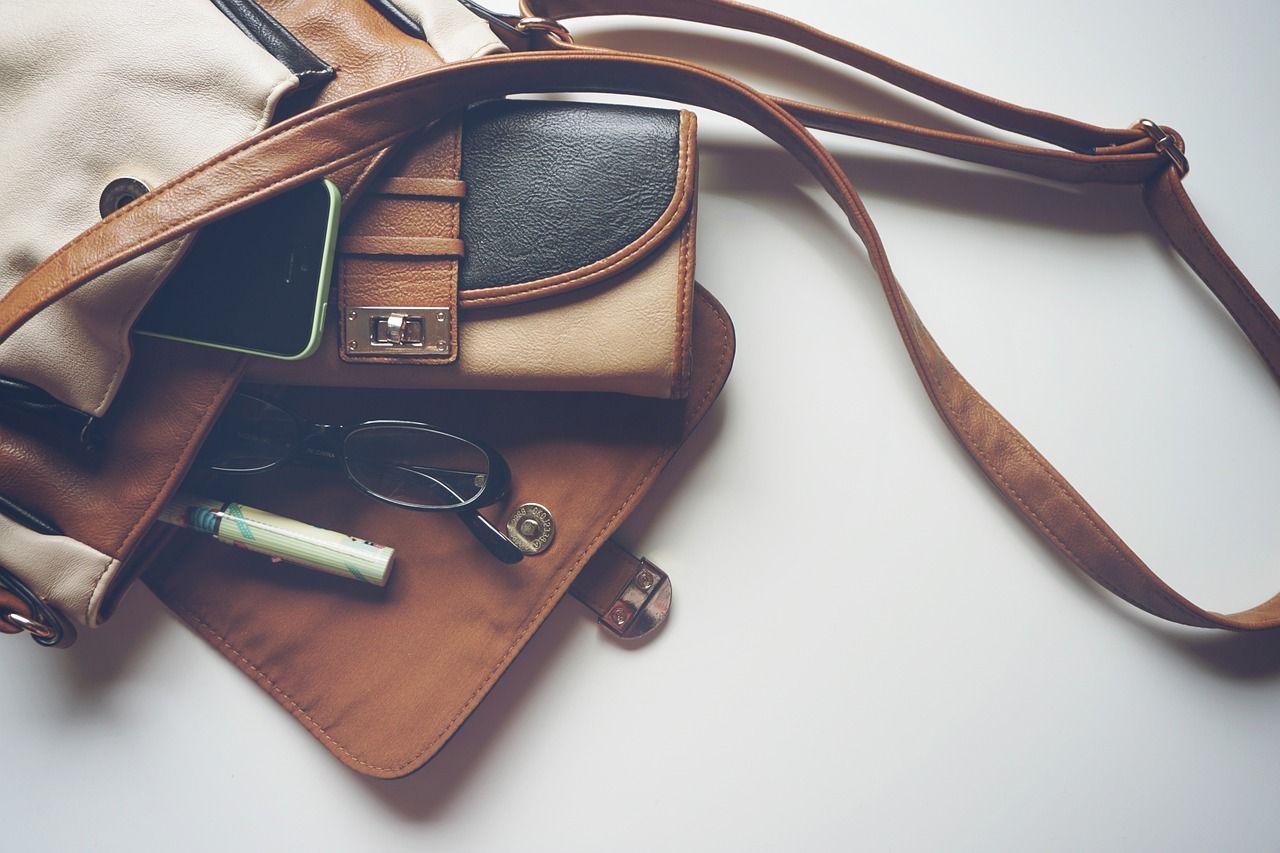
Start with what you carry every day, then work backwards to the bag. A bag that suits your daily load will get used far more than one chosen for looks alone.
List what goes in it
Lay out your phone, wallet, keys and whatever else you carry. Add a water bottle or a laptop if you take one. This gives you the minimum size. A bag that only just fits your things will strain its seams.
Pick the carry style that fits your day
- A shoulder bag is easy for daily use, but weight sits on one side.
- A crossbody bag keeps your hands free and suits travel and crowded places.
- A tote holds the most, but an open top offers less security.
- A clutch works for events, and it carries very little.
Look at the materials
Genuine leather is durable and needs some care. Faux leather costs less and varies a lot in quality, so read the reviews about peeling after a few months. Canvas is light and easy to wash. The listing should name the material, and a bag with no material listed is worth a second look.
Check the parts that fail first
Straps, zips and handle joins are where bags wear out. Look for stitched, reinforced strap joins and a zip that runs smoothly in the photos and reviews. Metal hardware usually lasts longer than thin plastic.
Check the dimensions
Listings give width, height and depth. Compare them with something you own, such as a notebook or a tablet, to see how much space that really is.
Match it to what you wear most
Neutral colours such as black, tan or navy go with more of a wardrobe. A bold colour is fine if you enjoy it, but it will be less flexible.